A Historical Light Shines on Aboriginals
Prime Minister Kevin Rudd apologized to the Aboriginal people on behalf of the government of Australia today. He apologized for the actions of previous governments, which sanctioned the removal of mixed-race (half-caste here) Aborginal children from their families.
Hundreds of people, Aboriginal and not, gathered outside of Parliament House in Canberra, Australia's capital, to watch the speech, the contents of which come as promised by Rudd during his campaign last fall.

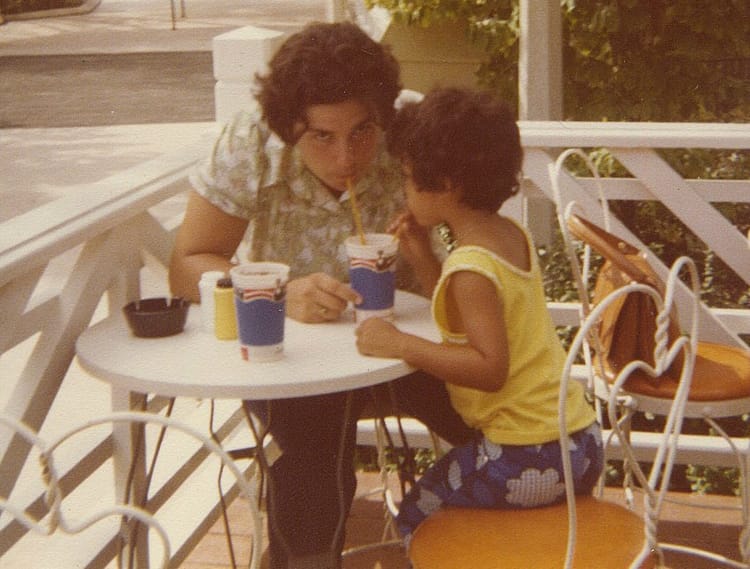
I'm not Australian. Really, I'm not. But to have been here today and watched the speech was amazing. I feel lucky that I was able to see the faces of the people who the apology touches. I know what it's like to clutch a parent's leg, screaming to not be taken away. The fear was overwhelming. But my screaming worked that day when I was very young, and I was spared for the moment. However, I eventually made it into a foster home, but it wasn't for very long, and I wasn't mistreated by the old white couple. I come from a country with its own history of disgusting treatment toward non-whites. And I only hope the the U.S. could see, and understand, what went on here today.
The Speech
One of the best parts of the speech, I thought, was the fact that Rudd highlighted something that people tend to overlook, or simply don't realize, and that is the main purpose of the forced removal of Aboriginals from their families was to eradicate them. Until today, I hadn't heard any news outlets discussing that aspect, but since the speech, I've heard it discussed three times.
He also called for a "war cabinet" to be headed by him and Opposition Leader, and Howard's replacement, Brendan Nelson, which would work to improve the life conditions of Aboriginals.
Rudd said a lot and it's hard to pick out the best parts, so below is the official apology (taken from one of the many papers reprinting the text):
Today we honour the Indigenous peoples of this land, the oldest continuing cultures in human history.
We reflect on their past mistreatment.
We reflect in particular on the mistreatment of those who were stolen generations - this blemished chapter in our nation's history.
The time has now come for the nation to turn a new page in Australia's history by righting the wrongs of the past and so moving forward with confidence to the future.
We apologise for the laws and policies of successive Parliaments and governments that have inflicted profound grief, suffering and loss on these our fellow Australians.
We apologise especially for the removal of Aboriginal and Torres Strait Islander children from their families, their communities and their country.
For the pain, suffering and hurt of these stolen generations, their descendants and for their families left behind, we say sorry.
To the mothers and the fathers, the brothers and the sisters, for the breaking up of families and communities, we say sorry.
And for the indignity and degradation thus inflicted on a proud people and a proud culture, we say sorry.
We the Parliament of Australia respectfully request that this apology be received in the spirit in which it is offered as part of the healing of the nation.
For the future we take heart; resolving that this new page in the history of our great continent can now be written.
We today take this first step by acknowledging the past and laying claim to a future that embraces all Australians.
A future where this Parliament resolves that the injustices of the past must never, never happen again.
A future where we harness the determination of all Australians, Indigenous and non-Indigenous, to close the gap that lies between us in life expectancy, educational achievement and economic opportunity.
A future where we embrace the possibility of new solutions to enduring problems where old approaches have failed.
A future based on mutual respect, mutual resolve and mutual responsibility.
A future where all Australians, whatever their origins, are truly equal partners, with equal opportunities and with an equal stake in shaping the next chapter in the history of this great country, Australia.

The Opposition Response
After the standing ovation given Rudd, and Rudd and Co.'s ovation of the 100 Aboriginal elders gathered in the gallery to hear the speech, Brendan Nelson stood up and gave a speech that many thought gutted the heart from what they had just heard. Meredith, still sleeping before her evening shift, I'm sure heard some of my scoffs.
Whereas Rudd's apology was offered without qualification, Nelson's certainly was. He took this opportunity, a very public stage, to return people's attention to gang rapes, welfare use, alcohol abuse, and other social injustices that exist in Indigenous communities. I couldn't help notice the irony of his comments. That perhaps the way the government has gone about addressing such issues is futile, including the intervention in the Northern Territory last year.
Whereas Rudd called attention to the attempted eradication of an entire race of people, Nelson took the spotlight and, veiled in his own side's apology, offered justification for the actions of this country's government. A reporter for the
Sydney Morning Heraldsummed up Nelson's words pretty accurately: "Dr Nelson spent the first half of his speech apologising for the removal of Aboriginal children, and the second half implicitly suggesting that there should be more of it today."
As Nelson put it himself:
"There is no compensation fund, nor should there be. How can any sum of money replace a life deprived of knowing your family? Separation was then, and remains today, a painful but necessary part of public policy in the protection of children. Our restitution for this lies in our determination to address today’s injustices, learning from what was done and healing those who suffered."
The backlash of Nelson's speech began immediately, as people turned their backs on the screen, going so far as to even unplug the live news feed.

But there were those who did more than turn their backs; the Sydney Morning Herald reported that some of the Liberal (the Bush fans here) members of Parliament didn't even stay for the speech.
"So the Prime Minister reads a speech, apparently some people stand up and sit down and then a miracle happens over night, there'll be no petrol sniffing ... and girls can sleep safely in the family bed at night," said Liberal MP Wilson Tuckey. Real nice.
And that's just the problem. Nelson brought all that back to the front with his remarks, despite his "best intentions," seemingly unable to let go of the sentiment that made this apology so late in coming: "Our generation does not own these actions, nor should it feel guilt for what was done in many, but certainly not all cases, with the best intentions."
Bringing Them Home
The apology comes eleven years after the publishing of Bringing Them Home, which details the injustices against Aboriginals. The report, published during former Prime Minister John Howard's rule, asks for a couple of things: reparations and an apology for the government's actions which were carried out with the express intent of eradicating Aboriginals.
The report includes a 1927 quote from Dr. Cecil Cooke:
Generally by the fifth and invariably by the sixth generation, all native characteristics of the Australian aborigine are eradicated. The problem of our half-castes will quickly be eliminated by the complete disappearance of the black race, and the swift submergence of their progeny in the white … The Australian native is the most easily assimilated race on earth, physically and mentally (quoted by Markus 1990 on page 93).Then there's this gem from a Professor Stirling from the University of Adelaide:
The more of those half-caste children you can take away from their parents and place under the care of the State the better … When they are a couple of years of age they do not require so much attention and they are young enough to be attractive.I am quite aware that you are depriving the mothers of their children, and the mothers are very fond of their children; but I think it must be the rising generation who have to be considered. They are the people who are going to live on (quoted by Mattingley and Hampton 1992 on page 160).Two Sides
Ultimately, Rudd's words are what everyone is speaking of in the hours following his speech. They say it's a step in the right direction.
The word "sorry" won't fill the holes left by what happened during most of the 20th century. It won't answer the question "Who Am I?" which the descendants of the Stolen Generations have. But as far as the future goes, it's a walk in the light.
There are a lot of people who refuse to see this small bit of it, who hit "comment on this article" and espouse uneducated, right-wing, nonsense based on nothing they know. Hopefully today's historic act and the positivity surrounding it can overshadow the negative. Hopefully everyone can step up, get over their ignorance, and move forward without forgetting.
Click around:The day we said 'sorry' - a pretty amazing multimedia presentation, including the speech (SMH)
Why we should say sorry - audio slide show in their own words (SMH)
Mixed reactions by Aboriginal elders
ABC coverage
Kevin Rudd's entire speech - audio (ABC.net)
Brendan Nelson's speech