It's Cricket
I'm tuned in to the fourth test match between India and Australia right now. I want very badly to change the channel, because India seems to be running away with the spirit of the game. If I remember correctly, hadn't Ricky Ponting declared by this point in the second test in Sydney? Spirit of the game. Yep, India sure seems to have it.
My interest in cricket surprises me. I doubted very much that I would like it, but it's such a huge part of Australian culture, as sports sport generally is, that I felt it my duty as a visitor to at least give it a chance. The first thing I knew I'd have to do was un-baseball myself. Then I had to settle into a level of comfort with the ins and outs of this historic, very un-American sport. The combination of the two, performed simultaneously, has been a bit of an exercise.
The pitchers bowlers run, most often, a good length before letting go of the ball. The balls bounce at some point on what is called the pitch before they reach the batter batsman who stands in the batter's box batting crease.
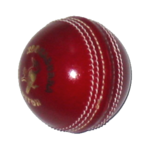
The ball.
So each pitcher (dammit!) bowler bowls what is called an over, which consists of six bowls. He bowls to his catcher wicket keeper who's wearing colorful gloves that I would have been afraid to wear when I was a catcher. Astoundingly, the wicket keeper is the only one wearing gloves. Fielders dive for and chase down hit balls with their bare hands. Crazy. Ass.
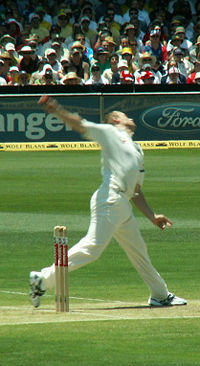
The bowler. Look at that shoulder. Ouch.
So what is the purpose of all this batting and bowling? That depends on which side you're talking about.
For the fielders, it is to get ten outs dismissals, or get the ten wickets that the batsmen hold. This is done in a number of ways, but the most obvious to me in the beginning have been to either knock two little wooden thingies bails that rest on three sticks stumps stuck in the ground or to get a batter out. Each time one is knocked out, the fielding team jumps up and down for utter joy as though they have just won some sort of championship or broken some sort of record. The first time I saw that was watching a Twenty20 match between Australia and New Zealand a month ago or so.
"Why are they doing that?" I asked Meredith, a bit annoyed because, well, a championship hadn't been won or anything.
"Because they got a wicket."
"Oh." I didn't get it then. I get it now. These things are hard to get.
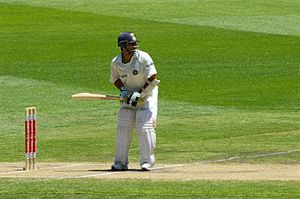
Sachin Tandulkar is a highly respected player for India. He seems to be the Tim Duncan (go Spurs!) of cricket.
The purpose of the two batsmen, who stand on either side of the pitch, is two-fold I think. They have to protect their wickets and get runs while wearing helmets and really big pads on their legs. For good reason. When one hits the ball, they both run if they can. Reaching their intended spot in the crease means a run.
Confused? I think I might be now. So I'll make this the end of what has turned into minor personal celebration of a sport I'm just getting to know. Now I will return to the test cricket, which amazes me the most. These test matches span a maximum of five days. Each side bats for two innings each. They play for hours a day.
The Australians, in this fourth of four test matches with the spirited, gentlemanly Indians who are most definitely playing in the spirit of the game, have now been in the field in 91 33-degree heat for a total of about I'd say five and a half hours...minus the morning tea, afternoon tea, and lunch.
India has scored 498 runs and Australia has nine of the opposition's wickets. It reads thusly on the screen, making me wince every time I look at it: 9/498. Noice.
Before I hit publish on this, Wikipedia, which is where all the pics and what not have come from, has this picture from a long time ago:
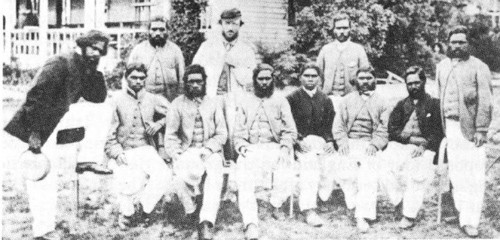
This is the first test cricket team of Australia back in 1867. The tradition got under way on the shoulders of Aboriginals.