Not Quite Original Thought
I was just hanging out in the wilderness here having braved the spiders to water the outdoor stuff and I decided to come back inside and give my brain a little jolt of academia.
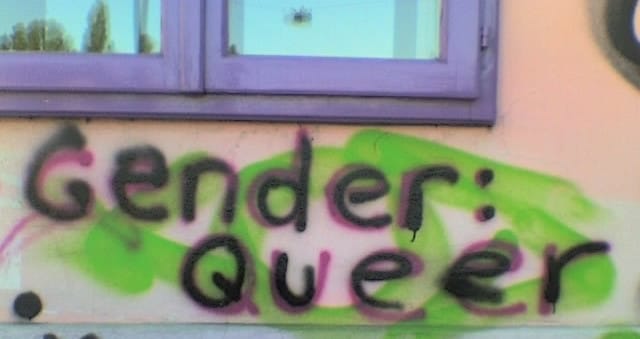
I came across a site that contains articles falling under identity subtexts, such as race, gender, and sexuality. My Big Three. I decided to read an article about bisexuality. You may remember, or not, that in my conference paper I examined those individuals falling "in between" strict binary poles in the more popular identity structure (e.g. the Big Three). Bisexuality was one of them.
Multi-racial individuals also became a part of my argument. So anyway, I'm reading this article, which was written by a couple of women in the English Dept. at Berkeley and this was their final paragraph: Finally, we believe that the continuum model of identity which explains bisexuality might be constructive in defining other forms of minority identity as well. Bi-racial identity, like bisexual identity, is still largely invisible and often a source of confusion and shame. Racial identity is frequently viewed as an 'us and them' situation -- many people who do not choose to identify with one race or the other in their backgrounds find themselves alienated from their communities.If we were to make race and ethnicity into 'continuum' identities, this would more accurately reflect the reality of contemporary life (as well as being far more inclusive). While it was once empowering for minorities to assert their value by embracing uniqueness, it is now becoming clear that such a move can be constrictive as well. Many people no longer feel as if they can fit into any of the minority communities available to them.
As a model for understanding how human identities work, the continuum offers us a place from which to view each other as versions of the same thing, rather than diametrically opposed to one another. Exactly.
Although I probably wouldn't have said it quite like this. But I question where the motivation for the function of this continuum would derive from. In my conference paper, I suggested that those ambiguous individuals "will continue to be unidentifiable, which will eventually represent the destruction of identity and the power that feeds it." (I never thought I would quote myself, but bear with me). In this article, the writers seem to contradict themselves a bit, though.
On the one hand, they call for the existence of a continuum of identity wherein the "in between" folks determine the pace of the continuum, i.e. how the mainstream, perhaps, would view the other (which is prevelant now) but more importantly how both view the gray area in the middle and begin to take their cues from them. But then, and this is where my argument loses momentum, we need identity. We're not comfortable when we can't determine the race, gender, sex, or sexuality of an individual. The authors of this article reinscribe the bisexual identity by naming its potential influence in the weakening of the sexuality continuum.
Ok, I have to go. I don't know where this little rant came from but I do know it's not focused. What I like, though, is the fact that I'm able to recognize issues I'm interested when they come up. I came across this site on a search for race, gender and pop culture, so it appears as though I am ready for school to start in five weeks and two days. Nevertheless, the jolt felt good.
I'm off to visit a friend of mine named Gail who met me when I moved to Sacramento as a wet-behind-the-ears, just-turned-23-year-old who knew no one and was a bit naive. She loved watching all the "new blood" come into the Open Book and she often took the young ones under her wing to sculpt them into dapper young thangs. It didn't quite work with me but she loves me, nonetheless. Peace out, folks. Go outside!