The life-saving effects of childhood sports
I watched the local news the other day. I hate local news. Worse, the remote was well within my reach on the sofa, but I didn't go for it. I just sat there. And watched.
After about 10 minutes I made an attempt to change the channel because I couldn't tolerate another weather report heralding the hot temperatures in the Bay Area as I sat in sweats and a sweatshirt on my west side of San Francisco. And then, just before a commercial break, the newscasters said something about how two brothers turned their chore-doing into some kind of world-changing something or other that had to do with baseball.
"After these words."
Playing sports saved my life. It's a dramatic statement, and it is not hyperbole.
Of course there is no way to know what course life is to take despite our best intentions to control its every turn. But I can say with a pretty fair amount of certainty that, without t-ball, slow-then-fast-pitch softball, volleyball, and basketball, my life would have looked a lot different. It might not even be a life anymore.
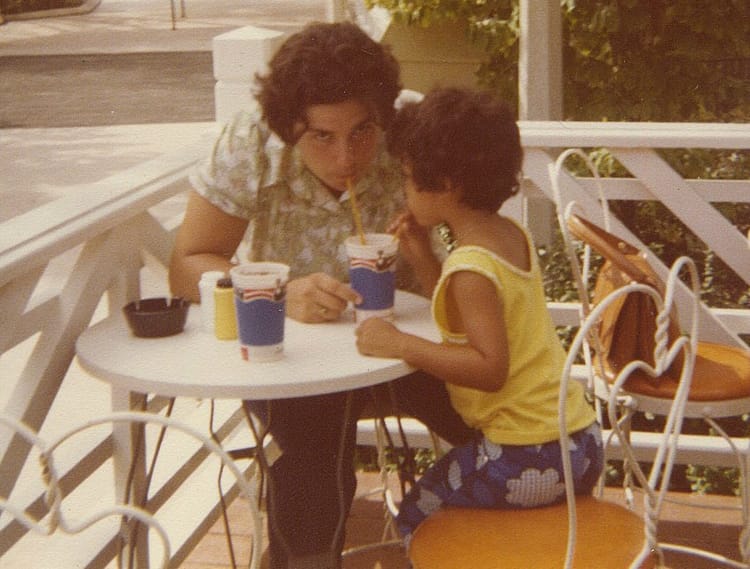
At five and six (and one and two and three and four) I knew I was gay, but I lacked the words to know it and the space to show it. I was mixed-variety brown and didn't have the corresponding parent. I had to belong. My mom put me in sports. Little did I know I would need them to survive.
First there was t-ball when I was five or six -- the only girl on the Pirates. The coaches put stars on our hats for doing good things. I don't know: hitting, catching, diving, sliding. When I was eight, I played slow-pitch softball at St. Elisabeth in the San Fernando Valley. Good Catholic schoolgirl by week, fierce competitor every Saturday. Eight years old. I loved it. I longed for it.
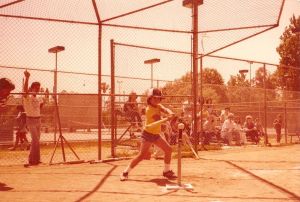
And back then, I looked forward to sleep time because I'd lie awake at night and imagine myself putting on a baseball uniform in order to play these games. Except I wasn't putting on the league-issued, quarter-sleeved shirt with the team name emblazoned in cursive across the front. The uniform I imagined as I fought off sleep came with everything that Major League Baseball players had: White pants! Stirrups! Blue belt (Dodgers fan)! Sweet cleats! Pressed jersey tucked in neatly! A Rawlings glove! And finally: The Hat.
In my fantasy, I walked out of the girls' bathroom alone, batting gloves, worn and crusted from the diamond's dirt and my sweat, slapped together and hanging out of my back-right pocket. The sun was always shining and the team was always waiting. So were the girls. I'm not sure who these girls were but they were there, awaiting my arrival in the stands while double-fisting boxes of Nerds and Red Vines.
It doesn't matter who they were. Or who their mothers or fathers. I relied on them all and the successful production of the softball league each fall. I needed somewhere to go. I needed there to be people who needed me to show up to play. I needed that to never go away.
These elementary school sports lead to high school sports, which meant I had somewhere to be every day after school. They meant survival.
But sports require equipment. I'm not sure how my mom got her hands on all of the supplies for me, but she did. Other kids aren't so lucky, which brings me back to the local news and these Bay Area brothers. I won't rehash the entire story; you can watch it on your own time.
The gist of it is that there are two boys who live in San Jose who went rooting around in their garage on dad's orders one day and came across all their old equipment. So they decided to do what any normal 11- and 13-year-old boys would do: They started a foundation called Baseball Buddies to collect old and not-so-old baseball equipment to donate to kids who might not be able to afford it.
So if you're a so-called helicopter parent or just have a mitt lying around somewhere that a kid could use, find Baseball Buddies or something else like it. Donate something. And maybe save a life.